
Agricultural Progress and Challenges : Insights from CAADP Biennial Review
The Biennial Review report highlights country performance against the various indicators selected in to track the progress towards a fully transformed agriculture.
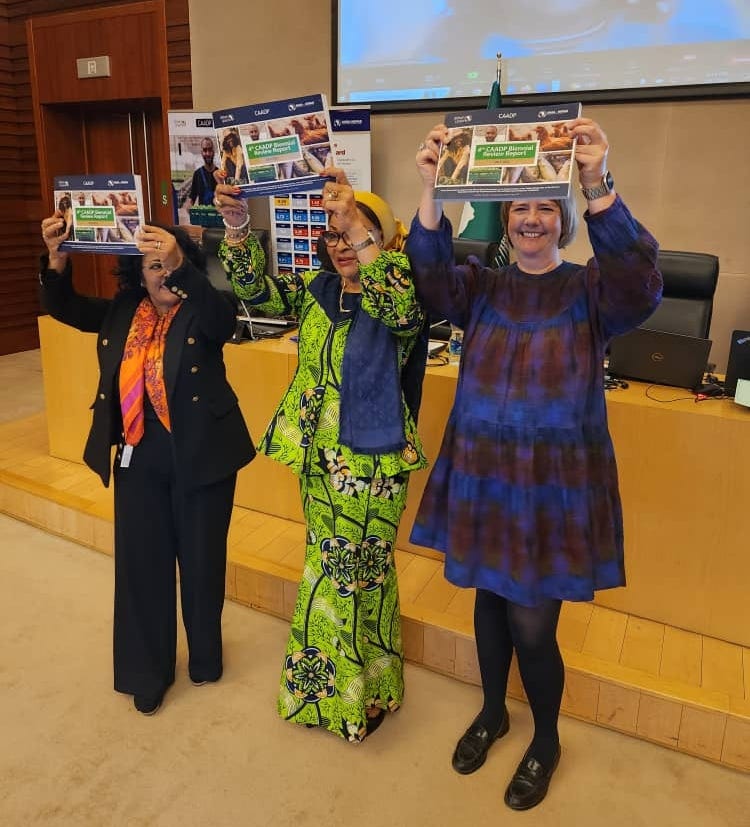
ADDIS ABABA, Ethiopia (Planet Defence) - The fourth Biennial Review cycle of the Comprehensive Africa Agriculture Development Programme (CAADP) has shed light on the state of agricultural growth across the continent, revealing both strides and setbacks writes José Fucato in Addis Ababa, Ethiopia.
As a principle, the AU ensures the quality data are used to evaluate the countries performance by using the electronic biennial review (e-BR) system and building on lessons learned, and best practices. These involved several training sessions of experts, rounds of data review and cleaning at the national, regional, and continental levels.
According to the 2023-2024 report, only 11 out of the 49 member states that submitted their agricultural value-added indicator reports are currently on track to achieve an annual growth rate of at least six percent.
These countries include Benin, Botswana, Burkina Faso, Egypt, Gambia, Ghana, Guinea, Mauritius, Niger, Nigeria, and Togo. While this represents a decrease from previous cycles, it still indicates progress compared to earlier periods.
The report also underscores the persistent challenge of poverty, with only three member states (Benin, Cape Verde, and Morocco) on track to reduce poverty rates. High poverty levels continue to exert a significant impact on Africa's food system, necessitating urgent action to address this issue.
Highlighting the importance of poverty reduction for the transformation of Africa's food system, the report emphasizes the essential nature of this endeavor.
It stresses that poverty affects every aspect of the food system, from production to consumption, and is integral to realizing Africa's vision of a transformed, efficient, and resilient food system.
Furthermore, the report underscores the commitment to strengthen resilience to climate variability, given the recent increase in the frequency and severity of climate-related shocks. However, the continent falls short of its commitment to building resilience, with disparities evident across regions.
In terms of intra-African trade, progress remains uneven, with only three countries (Lesotho, Niger, and Senegal) on track to boost trade by 200% by 2025. The report notes that the performance observed in 2023 marks the worst record so far in the four review cycles carried out to date.
Despite these challenges, there are pockets of progress, with two member states (Rwanda and Zambia) on track to triple their trade with other African countries. Additionally, Equatorial Guinea stands out for its efforts in trade facilitation through the creation of favorable trade policies and institutional conditions.
In summary, the CAADP biennial review offers valuable insights into the state of agricultural progress and challenges in Africa, emphasizing the need for concerted efforts to address poverty, build resilience to climate variability, and foster intra-African trade.